
The Luxembourg SOPARFI is often discussed primarily through the lens of tax efficiency. That description is incomplete. A SOPARFI is not a special legal form but an ordinary Luxembourg capital company, commonly established as an SARL or SA, used to hold and finance participations.
Its effectiveness depends not only on the participation exemption regime, but also on governance, accounting discipline, financing arrangements and the ability to demonstrate that the company’s Luxembourg position reflects its actual operations. In 2026, those operational factors increasingly matter alongside tax analysis.
The Participation Exemption Is Conditional
A SOPARFI is fully subject to Luxembourg corporate taxation. Its principal attraction is that qualifying dividends and capital gains may benefit from the participation exemption under Article 166 of the Luxembourg Income Tax Law.
The exemption is not automatic. Conditions relating to the participation, holding period and status of the subsidiary must be satisfied.
That distinction matters because a SOPARFI should not be understood as a tax-exempt vehicle. Income that does not meet the conditions remains subject to the ordinary tax framework, while expenses linked to exempt participations may also require specific treatment.
The practical question is therefore whether the investment qualifies, not simply whether it sits inside a Luxembourg holding company.
Governance Shapes the Operational Reality
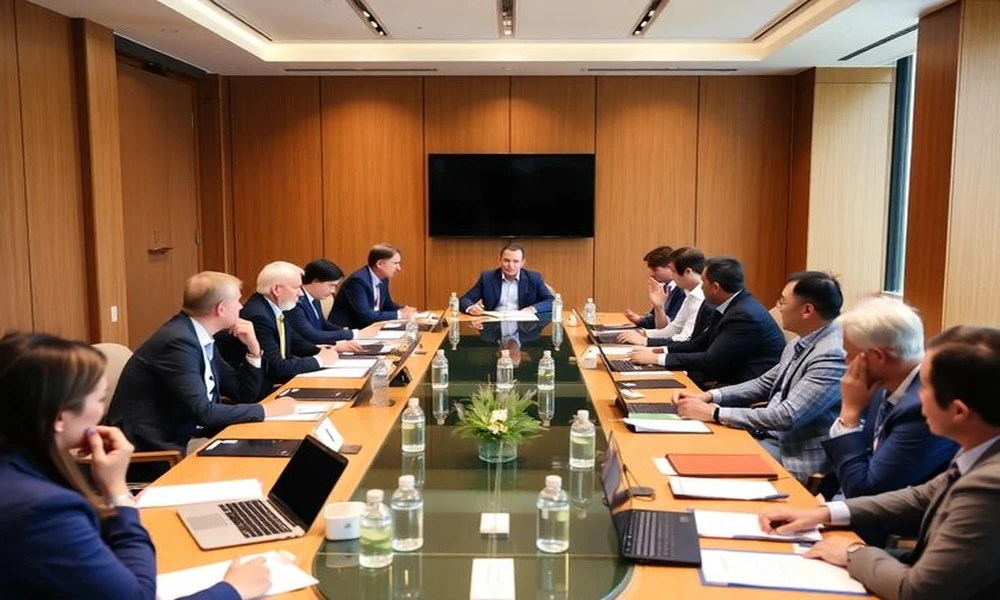
A holding company may have limited day-to-day commercial activity, but its governance still matters.
Boards should be capable of understanding and approving major decisions such as acquisitions, disposals, financing arrangements and distributions. Minutes and supporting documents should show how those decisions were considered.
Financial Services Luxembourg’s analysis of the SOPARFI framework places governance and genuine Luxembourg decision-making alongside taxation and accounting as part of the structure’s operational framework.
This is particularly important for international groups where shareholders, advisers and operating subsidiaries may be located in several jurisdictions.
Substance Is More Than a Checklist
Substance is frequently reduced to a list of formal indicators: a Luxembourg address, local directors, a bank account or a certain number of board meetings.
The legal analysis is more nuanced.
There is no universal statutory substance checklist applying identically to every SOPARFI. The relevant considerations depend on the company’s activities, tax-residence position and applicable anti-abuse rules. A pure holding company and a financing company may therefore face different expectations.
What matters is whether the company’s governance, administration and decision-making are consistent with the position it claims to occupy within the group.
Intragroup Financing Requires Separate Discipline
Many SOPARFIs do more than hold shares. They may also lend funds to subsidiaries or participate in wider treasury arrangements.
Those activities create additional requirements. Intra-group financing should reflect the arm’s-length principle, and the pricing of loans or financial margins needs to be supportable. Interest deductibility may also be affected by Luxembourg’s interest-limitation rules.
This means financing cannot simply be added to a holding structure as an administrative convenience. The capital at risk, pricing, documentation and governance of the financing activity must be considered separately.
Tax Residence Depends on Where Management Occurs
For cross-border groups, tax residence is another operational issue.
A Luxembourg company may be incorporated locally, but incorporation alone does not resolve every residence question where management is exercised elsewhere. The location of key decision-making, board activity and the company’s actual administrative organisation may become relevant under domestic law or treaty analysis.
This is why formal documentation should reflect genuine behaviour. Minutes produced after the event are a weak substitute for a board that actually considers and approves significant transactions.
Accounting Supports the Structure’s Credibility
The SOPARFI remains subject to ordinary Luxembourg accounting and annual reporting obligations.
Its books should reflect dividend income, financing transactions, acquisition costs, impairments and dealings with related parties consistently. Annual accounts must then be prepared and filed under the applicable Luxembourg framework.
Reliable accounting also supports tax analysis. The participation exemption, financing costs and distributions cannot be assessed properly if the underlying records are incomplete or inconsistent.
Annual Compliance Is Part of the Structure
A holding structure continues to generate obligations after incorporation.
Annual accounts, tax returns, beneficial-ownership information and corporate records need to remain current. Changes in shareholding, financing or governance can also create additional documentation requirements.
For international groups, these recurring obligations are what turn a legal structure into an operating corporate vehicle.
Conclusion
The SOPARFI remains a flexible Luxembourg holding structure, but its value cannot be understood through taxation alone. Participation exemption, intragroup financing, governance, tax residence, substance, accounting and annual compliance are interconnected.
The operational reality behind the structure is therefore as important as its legal design. A SOPARFI that is properly governed, documented and administered is better placed to support international investment activity than one designed around a tax outcome without equivalent attention to how the company actually functions.
